
Mk1 1300 GT
1968–1974The sporting everyday Mk1, with a twin-choke Weber carburettor and extra dials in the dashboard.
- 1298cc Kent OHV
- 72 bhp
- 0–60 12.5s
- 94 mph
The Escort replaced the Anglia in January 1968 and was a hit straight away: light, simple and rear-wheel drive. Ford's Advanced Vehicle Operations turned it into a rally weapon, and it has been a motorsport legend ever since.
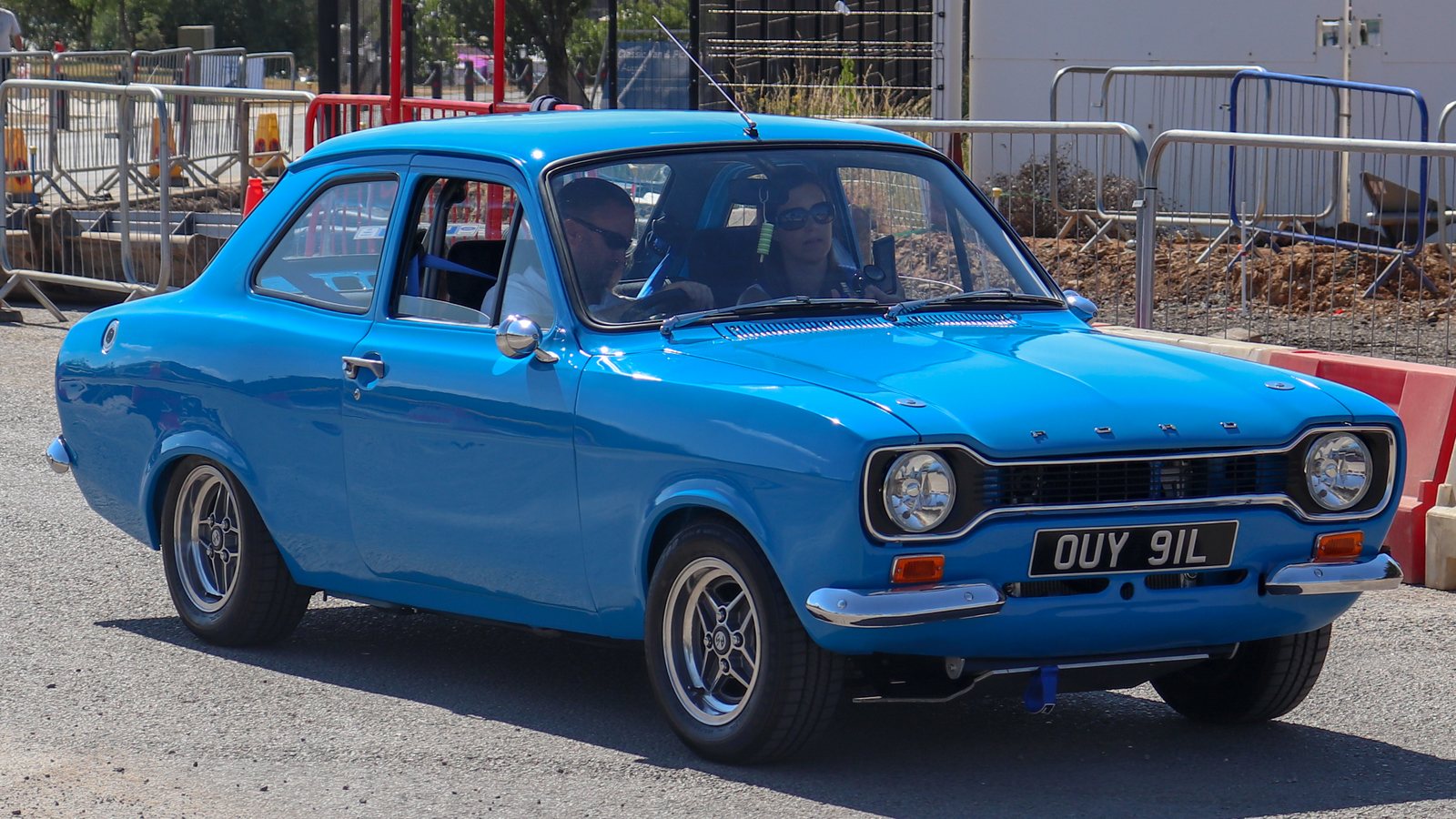
Look for a solid, straight shell with its original panels, the correct engine for the model, and history going back decades. On RS and Mexico models the bodyshell matters most. These cars used a strengthened shell, often called the Type 49, with reinforcements a standard car lacks, and a specialist can confirm it in minutes. Many "Mexicos" are standard shells with added stripes.
The Sport used the 1300 GT's tuned engine and the flared front wings from the AVO cars, with simpler trim. The 1300E ("E" for executive) had the same wheels, wings and engine, plus an upmarket interior. Both give you the RS look for a fraction of the price, and both are the usual starting point for fake Mexicos.
The Mk1 was also built or assembled in other markets, including Australia, where the Twin Cam was later sold as the GT 1600, and South Africa. Imports can be good buys, but decoding their specifications takes specialist knowledge.
Specifications are approximate period figures. Value ranges are indicative UK prices for good to excellent cars in 2026; see the full price guide.
The sporting everyday Mk1, with a twin-choke Weber carburettor and extra dials in the dashboard.
The GT engine and the flared front wings from the AVO cars, with simpler trim. It has the RS look for much less money, which makes it a common base for fake Mexicos.
The "executive" Escort. It had the Sport's wheels, flared wings and engine, plus an upmarket interior with wood trim.
The first homologation Escort, using the Lotus Cortina engine. It won rallies within weeks of launch.
The first car to wear the RS badge. Its 16-valve, belt-driven Cosworth BDA engine is still revered by rally engineers.
Named after the 1970 London–Mexico World Cup Rally win. The strengthened shell, trademark stripes and roughly 9,000 built make it one of the most-faked Escorts.
Took the torquey 2-litre Pinto engine from the Cortina. Easier to live with than a BDA car.
Check each of these areas, in this order, at any viewing.
A fake Mexico or a rotten RS2000 can cost you more than the car. The Escort Buyer's Bible is 46 pages of what the specialists check, written for people about to hand over real money.